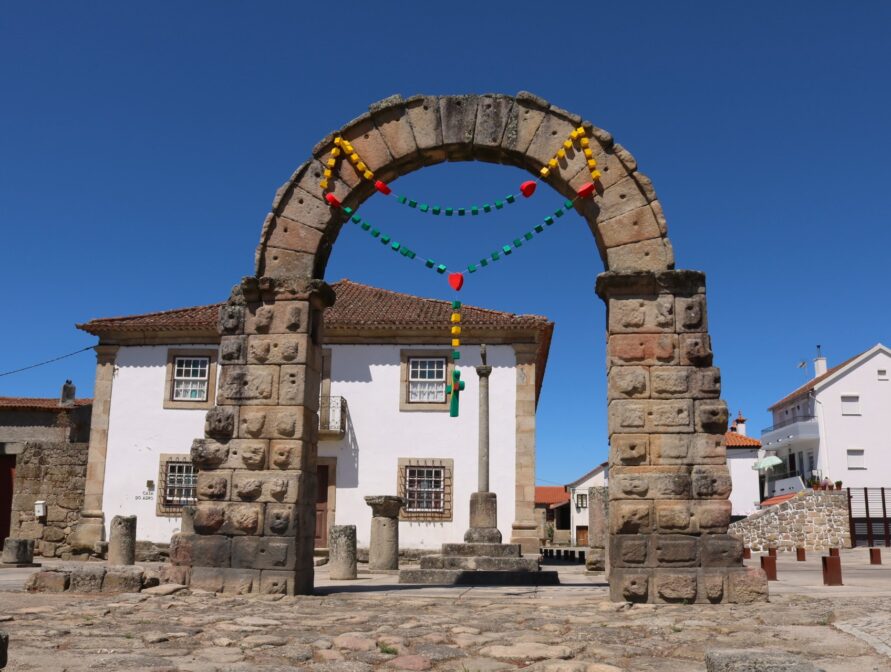
The region around Quinta do Retiro may not be Portugal’s largest and most spectacular Roman site (such as Conímbriga or Évora), but it does boast fascinating and authentic remains, particularly those related to the old Roman road that ran through the mountains. And the gem of Bobadela:
Here are the most beautiful and important Roman remains around Quinta do Retiro
- Conímbriga (The Absolute Top)
What it is: The most important and best-preserved Roman ruined city in Portugal. Located about 60 km southwest of Quinta do Retiro, near Coimbra, it’s an absolute must-see for any Roman history enthusiast.
Highlights: Fantastically preserved mosaic floors (some still in situ), the ruins of houses and a forum, impressive late-period city walls, and beautiful gardens reconstructed as they were in Roman times.
Practical information: Plan on at least 2-3 hours. Combine your visit with the excellent on-site museum. It’s a perfect day trip from Quinta do Retiro.
- The Roman Bridge of Bobadela (Ponte Romana de Bobadela)
What it is: An excellently preserved Roman bridge in the historic village of Bobadela (about a 15-minute drive north of Oliveira do Hospital).
Highlight: The bridge is still in use for local traffic. Its perfect arch and robust construction are a beautiful example of Roman civil engineering. The village of Bobadela itself also has an interesting Roman heritage, including a monument that was probably a mausoleum or milestone.
Practical: Easy to reach. Stop for a moment, walk across the bridge, and explore the small, charming village.
- The Roman Road (Geira) and Milestones in the Serra da Estrela
What it is: The old Roman road that ran from Mérida (Spain) to Braga crossed the Serra da Estrela. Sections of this road and several milestones (millarium) can still be found in the area.
Locations: A significant concentration is found around São Romão and Loriga (on the south side of the Serra da Estrela, a little further away). The road was used to transport gold from the mines in the region.
Practicalities: This is more for the adventurous and interested seeker. It is not an excavated site, but a historical trail in the landscape. Hikers can walk sections of the old path. Information signs (in Portuguese) sometimes point the way.
- The Archaeological Museum of Tábua (Museu Municipal de Tábua)
What it is: A small but excellent local museum showcasing the history of the region.
Roman connection: Finds from the Roman period in the area, such as pottery, coins, and tools, are preserved and exhibited here. This provides context and proves that the area was indeed inhabited and used in Roman times. Practical: A good starting point for an overview. Check opening hours in advance.
- The Roman Villas (Villae) of the Region
What it is: Remains of Roman villas (farms) have been found scattered throughout the countryside. These are often not spectacularly excavated or exhibited, but are sometimes indicated.
Example: Traces of such villas have been found near Arganil (southwest of Tábua). It’s more about the knowledge that the landscape was designed this way.
Recommendations for your visit:
- Priority 1: Take the day trip to Conímbriga. This is by far the most impressive and rewarding Roman site in the entire Central Portugal region.
- Priority 2: Visit the Roman bridge of Bobadela. It’s nearby, authentic, and combines perfectly with a visit to the beautiful village and lunch nearby. 3. For the seasoned enthusiast: From Oliveira do Hospital, take a drive to the Serra da Estrela and look for traces of the old Roman road near Loriga or São Romão. Combine this with a hike in the mountains.
Important context: The Romans were primarily interested in this mountainous region for its mineral wealth (gold, tin) and transit routes (such as the road over the Serra da Estrela). Therefore, you will find traces of infrastructure and rural life.
Why the town of Bobadela is so special:
Bobadela is an absolute gem! It’s not an open-air museum, but a lively, small village with exceptionally well-preserved Roman heritage seamlessly integrated into the streetscape. A visit feels like a journey back in time.
Here’s what to expect and why it’s worth it:
The Atmosphere of Bobadela
Bobadela has the status of “Aldeia Histórica” (Historic Village), and you’ll immediately feel it. It’s compact, peaceful (except during the annual festival), and made of granite. Best of all, the Roman and medieval heritage here isn’t behind fences, but is part of the village.
Highlights to See
- The Roman Bridge (Ponte Romana):
· The iconic arch bridge over the River Alva. Walk across it and admire its perfect, dry masonry construction. It’s astonishing that it’s still in daily use after 2,000 years. 2. The Roman Milestone/Mausoleum (Padrão dos Povos):
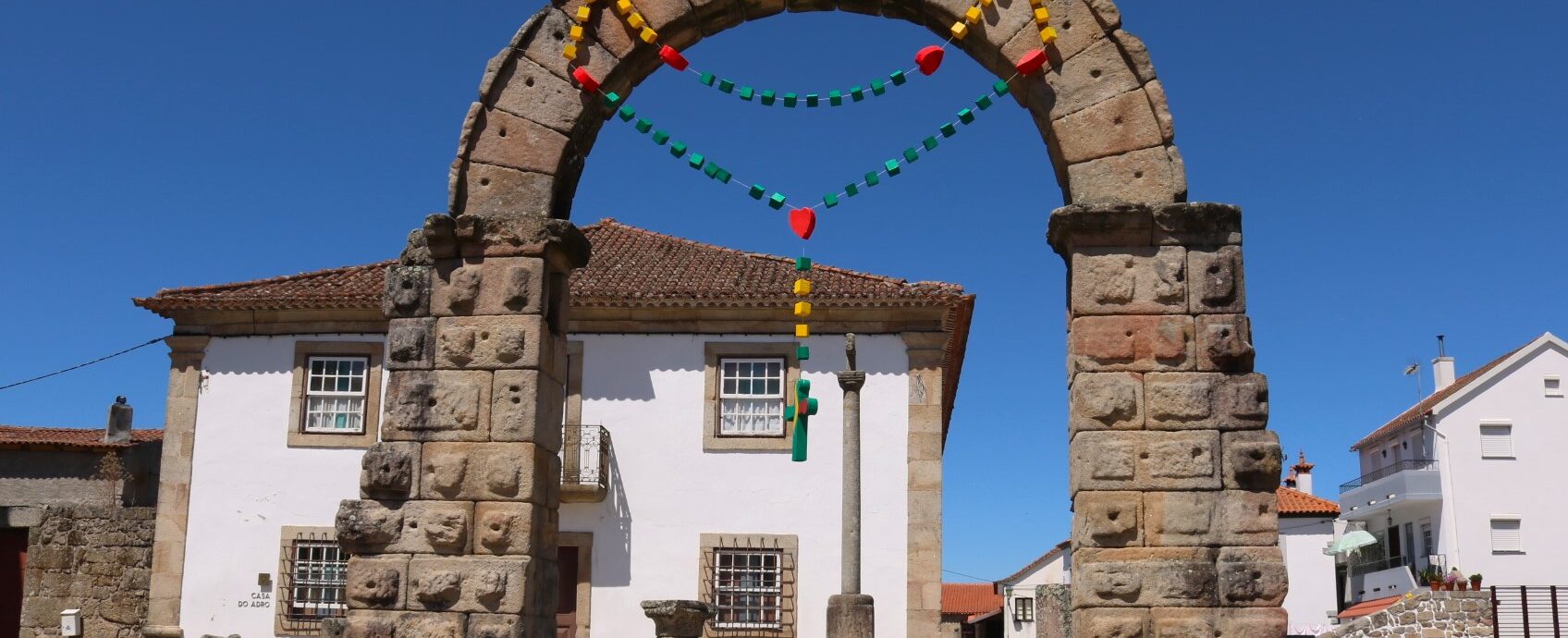
· This is the mysterious monument in the center. It is a granite pillar with inscriptions. Experts debate whether it was a milestone on the Via Militaris (Roman road) or a mausoleum for an important family. The inscriptions honor the indigenous people (“Povos”) who helped the Romans. It symbolizes the blend of cultures. - The Archaeological Site and Interpretation Center:
· The foundations of Roman buildings have been uncovered around the monument. Information panels (also in English!) have recently been installed explaining the history. This makes the visit much more accessible.
· You can see the plans of what was probably an important Roman forum or square. 4. The Medieval Heritage:
Pelourinho (Pillory): The 16th-century symbol of municipal autonomy, located in the main square (Largo do Município).
Igreja Matriz (Parish Church): Located in the same square, with later (Renaissance/Baroque) architecture, but possibly built on earlier foundations. - The Gate (Portas da Vila):
The stone gate that marks the old entrance to the fortified village. It gives an idea of what Bobadela looked like in the Middle Ages.
Practical Tips for Your Visit
Time: Allow 1 to 1.5 hours for a leisurely visit. Perfect for a stopover.
Parking: Park at the village entrance (there are small parking lots) and walk. The village is very small and best explored on foot.
Pair with: Lunch or dinner. There are a few simple but good local restaurants (tascas) in and around Bobadela where you can sample the regional cuisine. Restaurante “A Loja” is a classic.
· Photogenic: It’s a beautiful village for photography, especially in the soft light of the morning or late afternoon.
· Visitor Center: Inquire if the small interpretation center is open; it can provide more context.
Why Bobadela is Special
While Conímbriga is an “archaeological site,” Bobadela is a “living monument.” Here, you can walk across the same bridge as the Romans, see a monument between the houses, and feel how history has added layers without erasing the past. It’s intimate, authentic, and very serene.
Conclusion: Bobadela is a must-see for anyone in the region interested in history. It proves that you don’t always have to visit the largest ruins for an authentic Roman experience. It’s perfect to combine with a visit to the ‘oliveoil museum’, a drive through the Alva Valley or a visit to Oliveira do Hospital.
Combine your interest in history with the beautiful landscape, and it will be a truly special trip!